Phylogeny Again

Mike's Notes

  • Find a way to incorporate all of these into the front end.
  • Compare data sources - are they the same?
  • Do they use API?
  • Any open-source cladistic tooling?

Resources

References

  • Reference

Repository

  • Home > Ajabbi Research > Library >
  • Home > Handbook > 

Last Updated

11/05/2025

Phylogeny Again

By: Mike Peters
On a Sandy Beach: 18/04/2019

Mike is the inventor and architect of Pipi and the founder of Ajabbi.

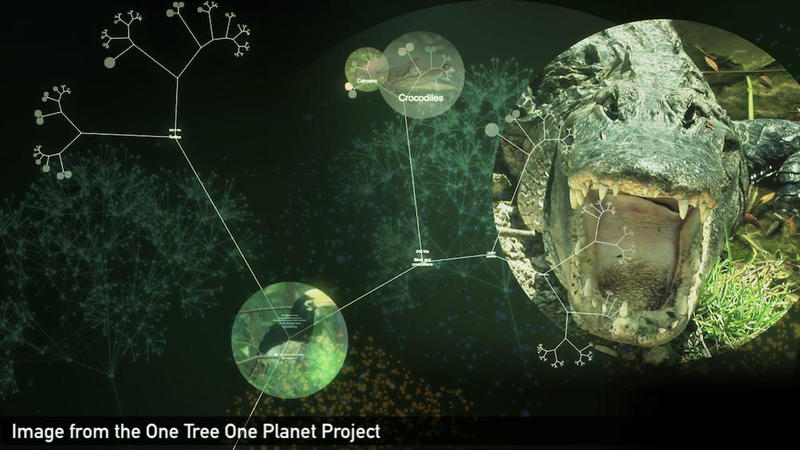
Using cladistics or clades, I have found some excellent visualisations of Phylogeny, the tree of life.

Upgrading from Java 8 to Java 12

Mike's Notes

Notes on Java remaining open.

  • The most precise explanations I've heard.
  • Develop on Java 12 OpenJDK.

Resources

References

  • Reference

Repository

  • Home > Ajabbi Research > Library >
  • Home > Handbook > 

Last Updated

11/05/2025

Upgrading from Java 8 to Java 12

By: Mike Peters
On a Sandy Beach: 17/04/2019

Mike is the inventor and architect of Pipi and the founder of Ajabbi.

The latest QCon weekly newsletter has a great article on the reasons to upgrade from Java 8 to 12 and the changes to Java support announced by Oracle.

Article key takeaways.

  • Since Java 8 a number of useful new language features have been introduced, along with new tooling, and performance improvements particularly for garbage collection.
  • When choosing to upgrade the choice you face is whether to upgrade to the latest version of Java (12) and be prepared to upgrade every six months; or upgrade to the latest LTS (11) to give yourself up to three years to think about your next upgrade.
  • Don’t be tempted to ignore compiler warnings.  Deprecation is being taken much more seriously in this modern Java world, and both Java 10 and Java 11 removed APIs.  
  • One of the changes from Java 9 was that internal APIs (largely those classes in packages that started with sun.misc.*) were hidden from use. APIs that are not core to the JDK have also been removed in Java 11. These changes may impact your application but there is a clear path to avoid these problems.
  • Once "over the hump" of this first upgrade, it's worth at least testing the application on the latest version of Java every 6 months, for example in CI.

There is a great Google Doc here which discusses OpenJDK etc.

Is Java still Free?

A panel discussion recorded April 9 at QCon London 2019, with video, slides and transcript. The panelists talk about costs, freedom of use, who governs Java/OpenJDK and what providers are for Java infrastructure for the next 5, 10, 15 years.

OneZoom Tree of Life

Mike's Notes

Notes about visualisation using OneZoom.

Resources

References

  • Reference

Repository

  • Home > Ajabbi Research > Library > Subscriptions > SFI
  • Home > Handbook > 

Last Updated

11/05/2025

Article

By: Mike Peters
On a Sandy Beach: 16/04/2019

Mike is the inventor and architect of Pipi and the founder of Ajabbi.

OneZoom has to be one of the coolest visualisations of the Tree of Life.


It is an interactive map of the evolutionary relationships between over two million species of life on our planet.

There is an excellent interview with co-creator James Rosindell in the Complexity Explorer newsletter.

Adobe Experience Platform Open API

Mike's Notes

More notes on Adobe.

  • Looks useful
  • Get API documentation
  • JSON/YAML?
  • Do some tests

Resources

References

  • Reference

Repository

  • Home > Ajabbi Research > Library >
  • Home > Handbook > 

Last Updated

11/05/2025

Adobe Experience Platform Open API

By: Mike Peters
On a Sandy Beach: 15/04/2019

Mike is the inventor and architect of Pipi and the founder of Ajabbi.

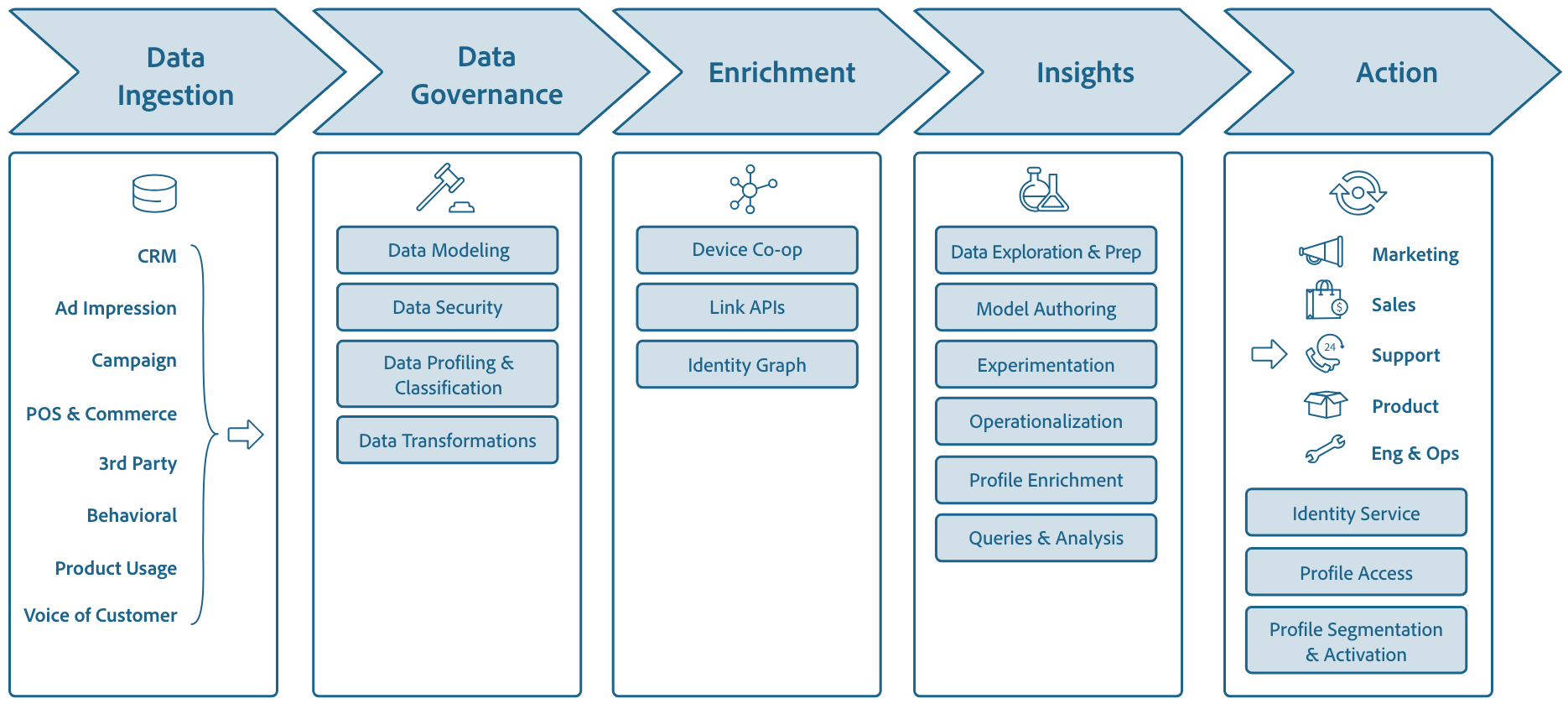
Adobe has been opening up its platform to integration with open API.

From the Adobe website...


API-First Development

Experience Platform has been designed and built using core principles of API-first development:
  1. The API is the primary interface of the Experience Platform.
  2. All Platform functions, including administrative functions, are available via API.
  3. Platform services, Adobe solutions, and 3rd party integrations use the same API.
Guided by these principles, Adobe Experience Platform services and solutions are designed by first looking at the API and ensuring the functionality exists to support developers through low-level CRUD operations. Only once the API is built can the user interface (UI) be constructed by making REST calls to the API. By starting with the API, Experience Platform allows not only Adobe developers but any developer to have the same access to the core logic of Platform services and solutions by means of the same API calls. This principle is not limited to REST-based APIs. It also applies to other interfaces into Experience Platform like message-based, event-driven interfaces that allow developers to build responsive, reactive applications.

The Sound of Hydrogen - iPython

Mike's Notes

  • Fast-moving changes
  • Jupyter Hub
  • Jupyter Labs (beta)
  • A gallery of interesting Jupyter Notebooks
  • Binder (in beta)
  • plotly for open-source graphing (ternary example) (biological example)
  • Solve the roadblock of Mathematica's non-sharing

Resources

References

  • Reference

Repository

  • Home > Ajabbi Research > Library >
  • Home > Handbook > 

Last Updated

11/05/2025

The Sound of Hydrogen - iPython

By: Mike Peters
On a Sandy Beach: 14/04/2019

Mike is the inventor and architect of Pipi and the founder of Ajabbi.

Here is a Jupyter nbviewer of the Sound of Hydrogen which is taken from a blog post on the Jupyter web site. Just experimenting and having fun.

Embed Jupyter nbviewer of iJulia on a web page

Mike's Notes

I'm playing with a Jupyter nbviewer of the iJulia programming language. I want to embed notebooks on external HTML webpages.

It's a terrific way to share a Jupyter Notebook.

Resources

References

  • Reference

Repository

  • Home > Ajabbi Research > Library >
  • Home > Handbook > 

Last Updated

11/05/2025

Embed Jupyter nbviewer of iJulia on a web page

By: Mike Peters
On a Sandy Beach: 13/04/2019

Mike is the inventor and architect of Pipi and the founder of Ajabbi.

Expanding Horizons: Understanding the EHT’s black hole discoveries

Mike's Notes

Outstanding science. These notes are taken from a Perimeter Institute email.

Resources

References

  • Reference

Repository

  • Home > Ajabbi Research > Library > Subscriptions > Perimeter Institute
  • Home > Handbook > 

Last Updated

11/05/2025

Expanding Horizons: Understanding the EHT’s black hole discoveries

By: 
Perimeter Institute: 11/04/2019

"The Event Horizon Telescope (EHT) is a project to create a large telescope array consisting of a global network of radio telescopes and combining data from several very-long-baseline interferometry (VLBI) stations around the Earth. The aim is to observe the immediate environment of the supermassive black hole Sagittarius A at the centre of the Milky Way, as well as the even larger black hole in the centre of the supergiant elliptical galaxy Messier 87, with angular resolution comparable to the black hole's event horizon." - Wikipedia


From a Perimeter Institute email.

The Event Horizon Telescope (EHT) collaboration will announce a “groundbreaking result” regarding black holes on April 10 at 9 a.m. ET.
  • Shep Doeleman, EHT Director, Centre for Astrophysics, Harvard & Smithsonian.
  • Dan Marrone, Associate Professor of Astronomy, University of Arizona.

Following the announcement, at 11 am ET, black hole experts will explore the implications of the findings during “Expanding Horizons,” a live panel discussion at Perimeter Institute.

On the panel will be:

  • Robert Myers, Perimeter Institute Director and BMO Financial Group Isaac Newton Chair in Theoretical Physics
  • Beatrice Bonga, postdoctoral researcher, Perimeter Institute
  • Asimina Arvanitaki, Perimeter Institute Faculty member and Stavros Niarchos Foundation Aristarchus Chair in Theoretical Physics
  • Brian McNamara, Department Chair of Physics and Astronomy, University of Waterloo

Articles

GCP in 4 Words or Less

Mike's Notes

More notes on GCP.

Resources

  • https://github.com/gregsramblings/google-cloud-4-words

References

  • Reference

Repository

  • Home > Ajabbi Research > Library >
  • Home > Handbook > 

Last Updated

11/05/2025

GCP in 4 Words or Less

By: Mike Peters
On a Sandy Beach: 10/04/2019

Mike is the inventor and architect of Pipi and the founder of Ajabbi.

The Google Cloud Developers Cheat Sheet by the Google Developer Relations Team can be found at GitHub.

"A list of every product in the Google Cloud family described in 4 words or less".

A ton of stuff is available with direct links to the products, documentation, etc.


Google Cloud Next '19

Mike's Notes

My notes on discovering more about GCP.

Resources

References

  • Reference

Repository

  • Home > Ajabbi Research > Library >
  • Home > Handbook > 

Last Updated

11/05/2025

Google Cloud Next '19

By: Mike Peters
On a Sandy Beach: 09/04/2019

Mike is the inventor and architect of Pipi and the founder of Ajabbi.

Google is holding a 3-day developer conference Cloud Next '19 in San Fransisco April 9-11. It started today at 4am NZ time.

6 streams are running at the same time, covering a variety of topics.

All of the conference sessions are available live-streamed and also on-demand. I'm watching all the conference sessions.

Here is a playlist of all sessions.


I'm following.

  • Running on cloud, on-premise and multi-cloud.
  • Data storage.
  • Avoiding vendor lock-in.
  • AI strengths and weaknesses.
  • Security.
  • Product demos.
  • Google Cloud road map.

The conference and many previous conferences are also available on YouTube.

There were 32 recorded sessions from the first day alone, so 90 hours of watching are coming up.

Multi-tenancy

Mike's Notes

Pipi 6 was built to support multi-tenancy. Deployments can be sole-tenancy or multi-tenancy, and databases use sharding.

Resources

References

  • Reference

Repository

  • Home > Ajabbi Research > Library >
  • Home > Handbook > 

Last Updated

18/04/2025

Multi-tenancy

By: Mike Peters
On a Sandy Beach: 06/04/2019

Mike is the inventor and architect of Pipi and the founder of Ajabbi.

I first read about sharding in an article about Xero. Pipi 4 didn't use sharding.

"The term "software multi-tenancy" refers to a software architecture in which a single instance of software runs on a server and serves multiple tenants. Systems designed in such a manner are often called shared (in contrast to dedicated or isolated). A tenant is a group of users who share common access with specific privileges to the software instance. With a multi-tenant architecture, a software application is designed to provide every tenant with a dedicated share of the instance - including its data, configuration, user management, tenant individual functionality and non-functional properties. Multi-tenancy contrasts with multi-instance architectures, where separate software instances operate on behalf of different tenants." - Wikipedia